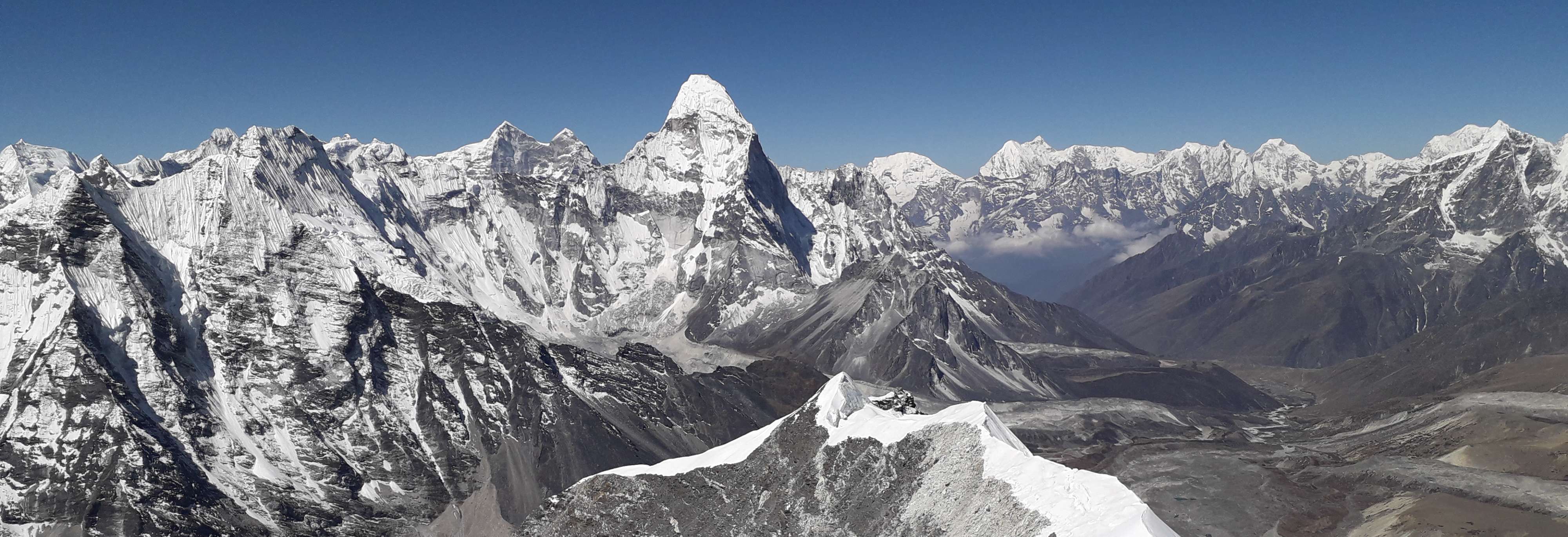
Island Peak Climbing Highlights
- Island Peak Climbing is one of the most popular adventure activities in Nepal.
- The trip offers a great opportunity to explore the country’s natural beauty and culture.
- Island Peak Climbing is a perfect choice for those who love adventure and want to challenge themselves.
- The trip starts with a scenic flight from Kathmandu to Lukla. Then, you will trek through beautiful forests and villages to reach the base camp.
- The highlight of the trip is the summit of Everest Base Camp Trek With Island Peak Climbing, which offers stunning views of Mt. Everest, Makalu, Lhotse, Amadablam, and the surrounding mountains.
- After summiting Island Peak, you will trek back down to Lukla and fly back to Kathmandu.
- The journey to Island Peak is one of a lifetime.
- Everest Base Camp Trek With Island Peak Climbing is an exciting challenge that offers unrivaled views, memorable experiences, and adventure!
- An estimated 95% of all people who climb Island Peak return home successfully, so be prepared for a steep climb.
Island Peak Climbing – Adventure in the Heart of the Himalayas
Island Peak (Imja Tse), located in the Solukhumbu District of Nepal, is one of the most popular trekking peaks in the Himalayas. This majestic mountain offers breathtaking panoramic views of surrounding peaks, making it a dream destination for both novice and experienced climbers.
The weather on Island Peak varies with the seasons — from clear, dry conditions in spring and autumn to challenging snow and rain during the monsoon and winter months. These changing conditions make the Island Peak climbing experience both exciting and unpredictable.
Climbing Island Peak requires strong mental and physical preparation, as the routes can range from moderate to highly demanding depending on the weather and the specific path chosen. Whether you’re an adventure seeker or an aspiring mountaineer, Island Peak Climb 2025/2026 offers a thrilling opportunity to test your endurance and experience the raw beauty of Nepal’s high Himalayas.
Planning and Preparation
Island Peak climbing is no small feat. Based on the Mera Peak, the Island peak climbing difficulty is slightly higher. It requires significant planning and preparation, both mentally and physically. Here are a few things to keep in mind as you plan and prepare for your climb:
- Choose the right time of year: The best time to climb Island Peak is between March-May and September-November. These months offer the best weather conditions for a successful summit
- Get in shape: This climb is not for beginners. You should be in good physical condition before attempting to summit Island Peak.
- Choose the right gear: Make sure you have the proper clothing and equipment for a high-altitude climb.
- Make sure you are physically fit enough to handle the climb: This is not a hike- it's a serious expedition.
- Get all the proper gear and equipment well in advance: You don't want to be scrambling to find things at the last minute.
- Plan your itinerary with your guide ahead of time: Ask about their knowledge of the route each day and make sure they know what type of terrain they will encounter that day. Ask them how many miles they plan to walk each day so you can anticipate how much weight you need to carry. just make sure everyone knows what their responsibilities will be during this expedition!
Climbing Island Peak Nepal
 Island peak climbing in Nepal is an incredible experience. Island Peak is also known as Imja Tse. The views are breathtaking, the air is thin and crisp, and the sense of accomplishment is unbeatable. That said, it's not a trip for the faint of heart. Here's what you can expect during your 17 days on the Island peak climbing with ebc.
You'll fly into Lukla, where you'll spend a few days acclimatizing to the altitude. Then, it's off to Base Camp, where you'll spend a few more days acclimatizing and preparing for the summit push. On summit day, you'll wake up early and start hiking around 1 am. You'll reach the summit around noon, and then it's all downhill from there! As you trek back down the mountain, make sure to soak in as much of the scenery as possible. When you get back to base camp. Enjoy the good food, warm tents, and hot showers while your body continues to acclimate before heading back out onto the trail again. It's best to do some trekking before attempting a second climb (say after returning from Island Peak Nepal), just so that you're ready for it when the time comes.
Best Time To Climb Island Peak
The best time to climb Island Peak is during the spring or fall. The weather is typically more stable during these seasons, and there is less chance of avalanches. Spring is also a good time to climb because the snow has melted enough to make the ascent easier, but not so much that the trail is muddy. Fall is a good time to climb because the temperatures are cooler, which can make for a more comfortable experience. In the winter, ice climbers sometimes use frozen lakes as base camps.
In the summer months, it’s difficult to navigate some parts of the mountain due to monsoon rains. It’s best to wait until autumn before attempting an ascent to see what conditions you will face when you get up high on the mountain. You will need to bring plenty of food and fuel with you if your goal is to summit Island Peak at any point other than the early season. As long as you're prepared, climbing Island Peak should be relatively straightforward. The most important thing to remember is that altitude sickness will occur, even among those who are used to hiking at high altitudes.
Altitude sickness usually begins around 3,000m/9,842ft above sea level, and one way to avoid this problem is by ascending slowly over days instead of quickly over just one day.
The second most important thing is water: drink lots! As mentioned earlier, the air will dry out your throat quickly while you're climbing the island peak - don't let yourself become dehydrated. Keep in mind that if you do decide to summit Island Peak from late May onwards then you may encounter stronger winds or possibly even snowfall at higher elevations; wear something warm!
Everest Base Camp Trek With Island Peak Climbing
EBC with Island peak climbing is a fantastic way to get up close and personal with some of the world’s most impressive mountains. The views from the summit are truly breathtaking, and the sense of accomplishment you’ll feel upon reaching the top is unmatched. Island peak climb is a great way to prepare for Everest base camp trekking.
Here is a step-by-step guide to Island peak climbing with Everest base camp trek, so you can make the most of your time in Nepal.
- Plan your ascent carefully once you reach Island Peak Base Camp (5,100m/16,732ft)
- Take some time to acclimatize to the altitude before continuing with your ebc island peak.
- Take it easy during this period and focus on eating well and sleeping soundly at night. Then set out early in the morning after breakfast and start walking toward Island Peak Base Camp.
- There are two campsites along the way: Island Peak Base Camp at 5,100m/16,732ft and Island Peak High Camp at 5,500m/ 18,044ft, where people often spend one night before continuing their journey up to Island Peak Base Camp.
- Remember that it is important not to overexert yourself as you hike up to 18,500 feet; stop often to eat something light if necessary.
- Be sure to pack plenty of water!
- As soon as you've reached Island Peak Base Camp, be sure to stay hydrated by drinking plenty of fluids.
In addition to Island Peak Climbing with EBC, there are many other possible adventures like rafting on white water rivers or exploring fascinating Hindu temples on the side of hillsides. This trip is an incredible experience that you will never forget!